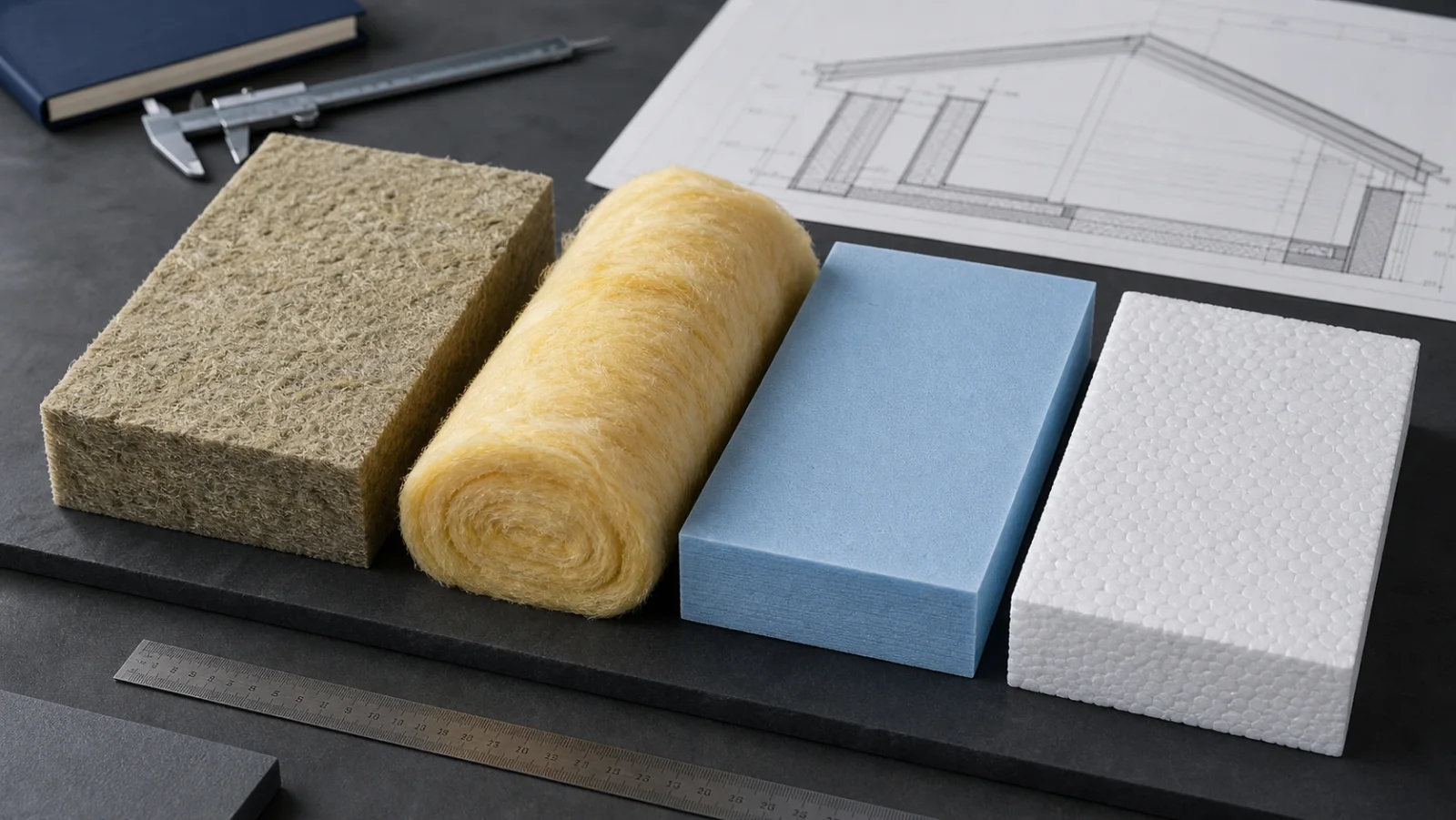
The main difference between XPS and EPS is their manufacturing method and the resulting cell structure. XPS is an extruded board with a homogeneous closed-cell structure; EPS is formed by moulding expanded polystyrene beads. This affects properties such as water absorption and compressive strength. It does not mean “XPS is better everywhere” or “EPS is sufficient for every façade”.
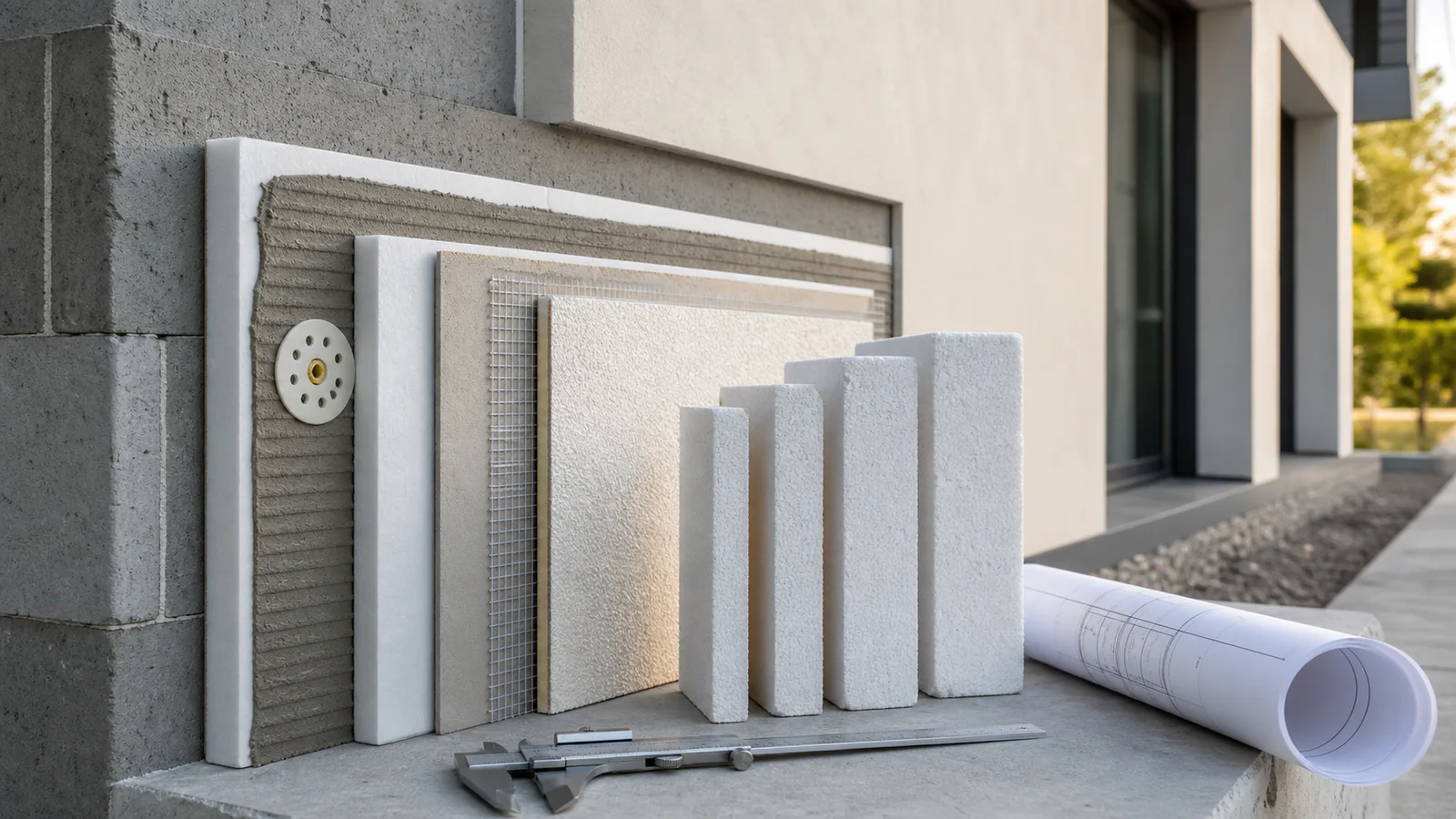
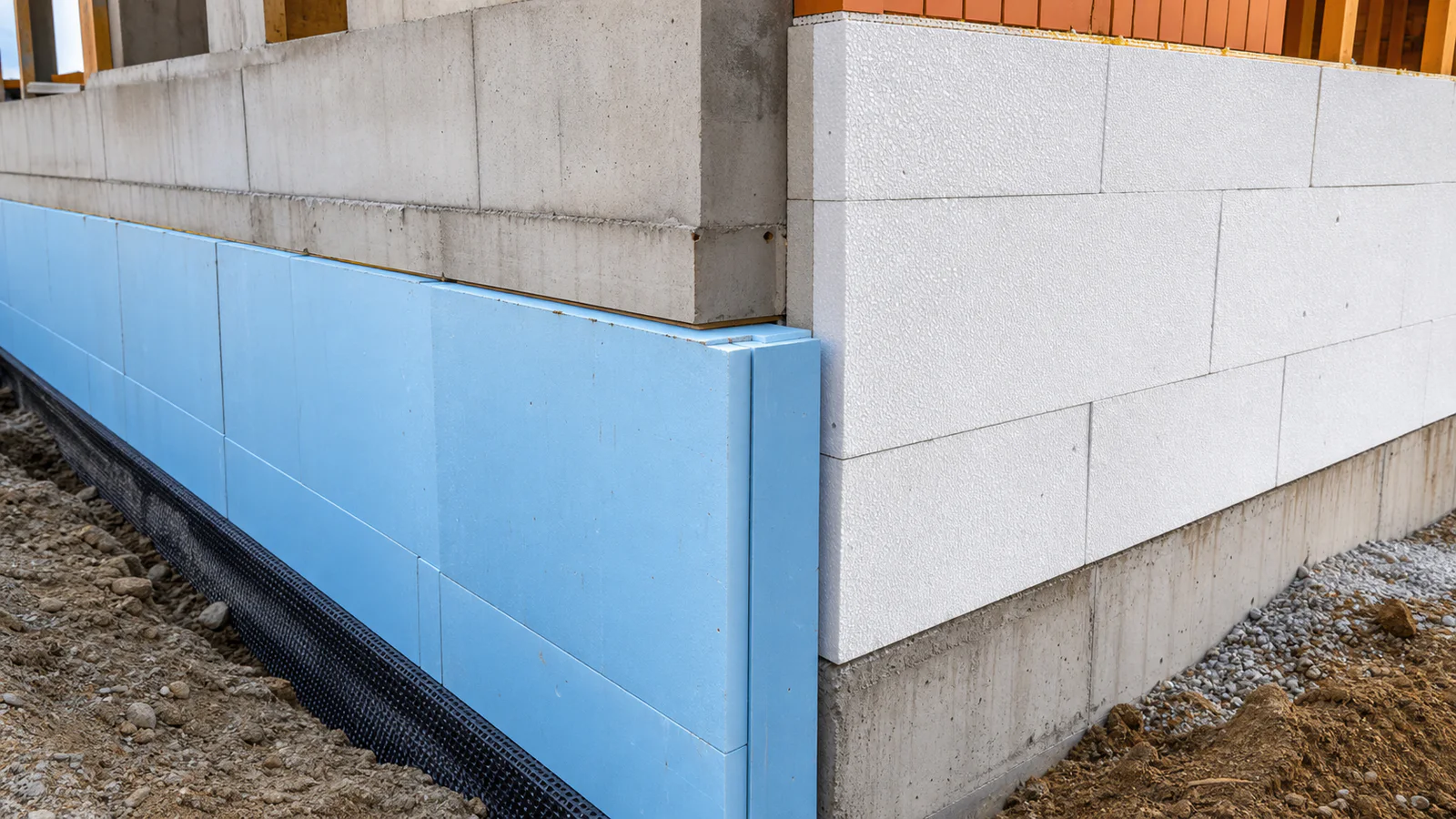
Suitable XPS is often preferred for foundations and ground-contact walls because low water absorption and mechanical strength are priorities. In rendered external wall insulation, EPS boards designed for the system, together with adhesive, fixings, render, mesh and finish, are a common ETICS solution.
XPS and EPS Comparison Table
| Criterion | XPS | EPS |
|---|---|---|
| Full name | Extruded polystyrene | Expanded polystyrene |
| Structure | Homogeneous, closed-cell foam | Expanded beads fused together |
| Details exposed to water | Suitable products stand out for low water absorption | Product class and system details require particular checking |
| Compressive strength | High-compressive-strength options are common | Products come in different compressive classes, selected for the application |
| External wall insulation | Requires a dedicated rough/grooved façade product and system approval | Boards specifically manufactured for rendered façades are common |
| Foundation/retaining wall | Classes suitable for soil and moisture are frequently used | Not every EPS board can be assumed suitable |
| Standard | Usually TS EN 13164 product standard | Usually TS EN 13163 product standard |
| Fire | Check product and system classes | Check product and system classes |
XPS or EPS for Thermal Insulation?
Compare declared thermal conductivity and thickness, rather than board colour or hardness. Approximate thermal resistance is thickness divided by lambda. For example, boards with different lambda values may require different thicknesses to achieve the same R-value.
The actual U-value of a wall or floor is calculated from all layers, including concrete, brick, render, insulation and others. Gaps at board joints, fixings, plinth transitions and thermal bridges such as balconies also affect performance. Choosing a system solely from the lambda value on a pack is therefore insufficient.
Why Is XPS Often Preferred for Foundations and Retaining Walls?
Below-ground thermal insulation faces moisture, backfill pressure, impacts and, in some details, sustained mechanical loads. Low water absorption and suitable compressive strength matter here. For example, the manufacturer defines RAVATHERM XPS T 300 SL for ground-contact foundation walls, flat roofs and loaded floors.
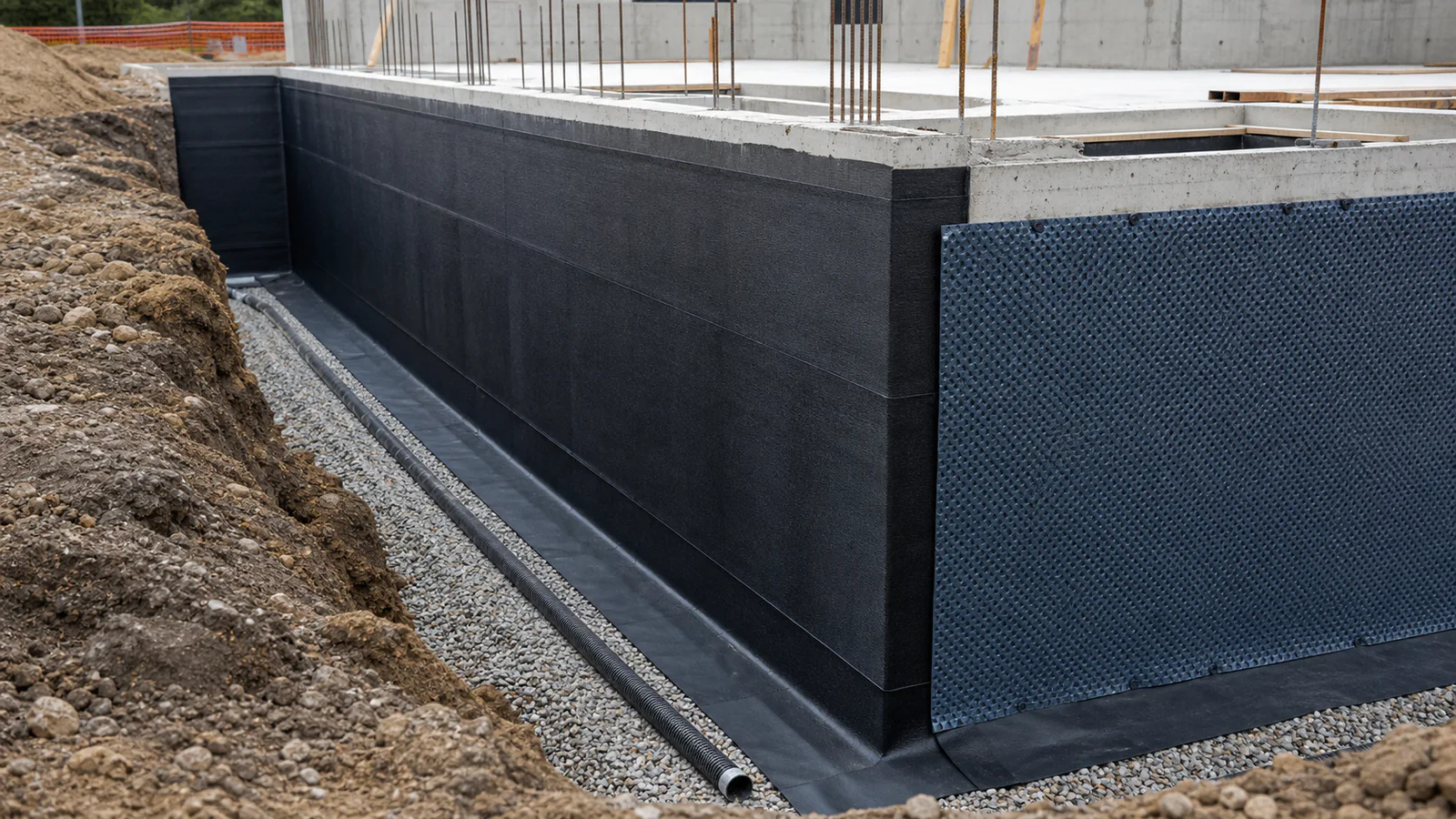
XPS does not replace waterproofing here. Install continuous foundation waterproofing first; the XPS board then contributes thermal insulation and membrane protection as designed. Drainage boards, drainage pipes and suitable backfill are separate layers. Their roles must not be confused in foundation details.
A product simply labelled “XPS” is not enough. Check below-ground suitability, compressive stress, long-term water absorption, edge profile and thickness in the data sheet. Compare relevant options in the XPS board category.
Which Is Used for Floor Insulation?
The load imposed on the board determines floor selection. Under-screed insulation in housing, industrial floors, cold stores and car parks do not require the same compressive strength. The design must account for point loads, live loads, screed thickness and long-term creep.
High-compressive-strength XPS is commonly used in floor and foundation applications. EPS with a suitable compressive class can also be used in some floor systems. Decide from the product's declared mechanical class and system design rather than its material family.
XPS or EPS for External Wall Insulation?
EPS is often chosen for rendered external wall insulation because of its purpose-made boards and widely available system components. The manufacturer defines graphite-enhanced EPS boards such as Manto İzopor Plus for façade systems. Tensile strength perpendicular to the surface, dimensional stability, tolerances and system compatibility are important for façade EPS.
XPS can stand out in special details such as plinths and areas near ground level exposed to impact and moisture. If XPS is used across the whole façade, verify a surface suitable for render adhesion, product approval, fire requirements and ETICS system integrity. Do not arbitrarily render over any XPS board with a smooth, glossy surface.
External wall insulation involves more than board selection. Adhesive, fixings, render, reinforcement mesh, corner profiles and finish must be compatible components of the same system. See all components on the external wall insulation solutions page.
Choosing XPS and EPS for Flat Roofs
On an inverted flat roof, thermal insulation lies above the waterproofing membrane and may be exposed to rainwater. XPS products with low water absorption and compressive strength suited to the load are therefore common. A separating/filter layer, gravel, tiles or specified finish is installed above the boards.
On a conventional flat roof, the insulation material and position can differ. Before asking “XPS or EPS?”, define the roof as inverted, conventional or dual-layer. Design waterproofing, vapour control, falls and outlet details together.
Colour and Density Can Be Misleading
- Blue, pink or another colour does not by itself indicate an XPS strength class.
- White and graphite-enhanced grey EPS may have different lambda values; compare data sheets.
- Density alone does not certify compressive strength or façade suitability.
- “Harder insulates better” is not a valid assumption; lambda and thickness govern.
- Fire performance is assessed for the finished façade or roof system as well as the board.
Checklist for Selecting the Right Product
- Define the application: façade, plinth, foundation, floor or flat roof.
- Determine required thermal resistance and thickness by design calculation.
- Check water absorption and moisture conditions.
- Identify short- and long-term mechanical loads.
- Verify fire requirements and product/system class.
- Check adhesive, fixing, membrane and finish compatibility in the manufacturer's detail.
Frequently Asked Questions
Does XPS replace waterproofing?
No. XPS is a thermal insulation board with low water absorption. Foundations and flat roofs also require a continuous waterproofing system appropriate to the design.
Can XPS replace EPS in external wall insulation?
Only XPS manufactured for façade render systems and approved within the system should be used. Not every XPS board is suitable beneath façade render.
Is graphite EPS always better than white EPS?
The graphite additive can provide a lower lambda value, but thickness, mechanical properties, storage in sunlight and system compatibility must be considered together.
How many kPa of compressive strength does a floor need?
There is no single value. Housing, warehouses, car parks and industrial floors carry different loads. The engineer must calculate short- and long-term loads to determine the appropriate product class.
Can XPS and EPS use the same adhesive?
Not always. Adhesives vary with surface structure, application and the manufacturer's system. Use the product approved in the data sheet.
Conclusion: Suitable XPS commonly stands out for foundations, below-ground use and high mechanical loads, while system-specific EPS is common in rendered external wall insulation. The final decision must use lambda, water absorption, compression, fire and system compatibility data. Browse XPS and EPS products, and obtain technical support from Erk İzolasyon for the right thickness and product class.