How many centimetres thick should external wall insulation be? It is inappropriate to give one number without even knowing the building's city. The appropriate thickness is calculated from the current climate zone, existing wall material and thickness, selected board's lambda value, target U-value, thermal bridges and building operating conditions.
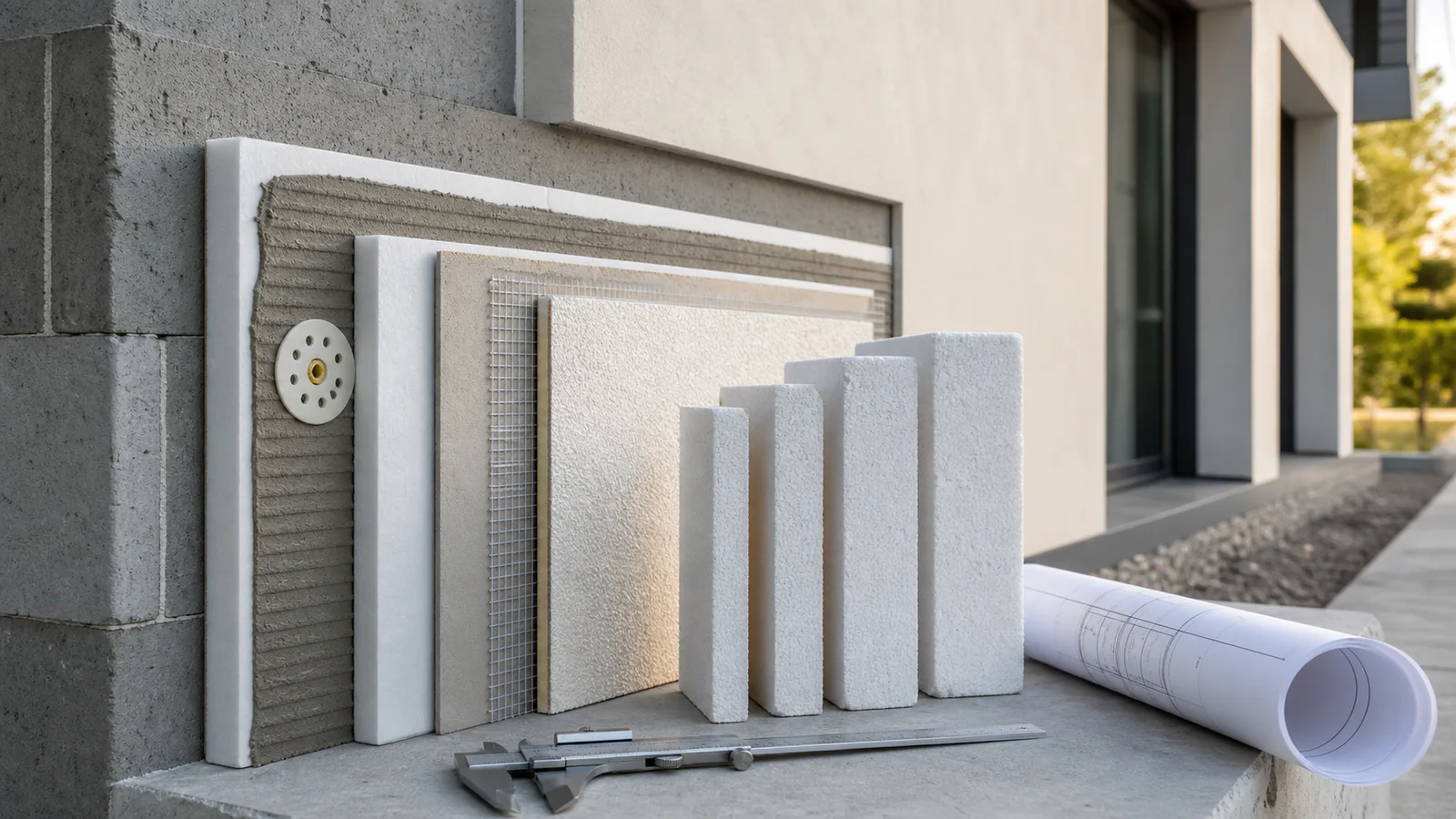
Thicknesses such as 5 cm, 8 cm and 10 cm may be available, but availability does not mean they are adequate for every building. Aerated concrete, solid brick and reinforced concrete walls in the same city may have different needs. EPS and stone wool of identical thickness may also provide different thermal resistance because their lambda values differ.
What Has the Current TS 825 Changed?
The TS 825 Thermal Insulation Requirements for Buildings Standard was updated, with the new regulation taking effect on 1 April 2025. The Ministry of Environment, Urbanisation and Climate Change states that climate zones increased from 4 to 6 and cooling demand was included in the calculation.
It is therefore inappropriate to reuse an old “city–thickness” table directly for a new project. For new buildings, the designer prepares the thermal insulation report using the current calculation method. In existing-building renovation, an expert should also assess targets, wall assemblies and condensation risk.
Last technical review: 17 July 2026. If regulations or standards change, the version in force must be used for the design calculation.
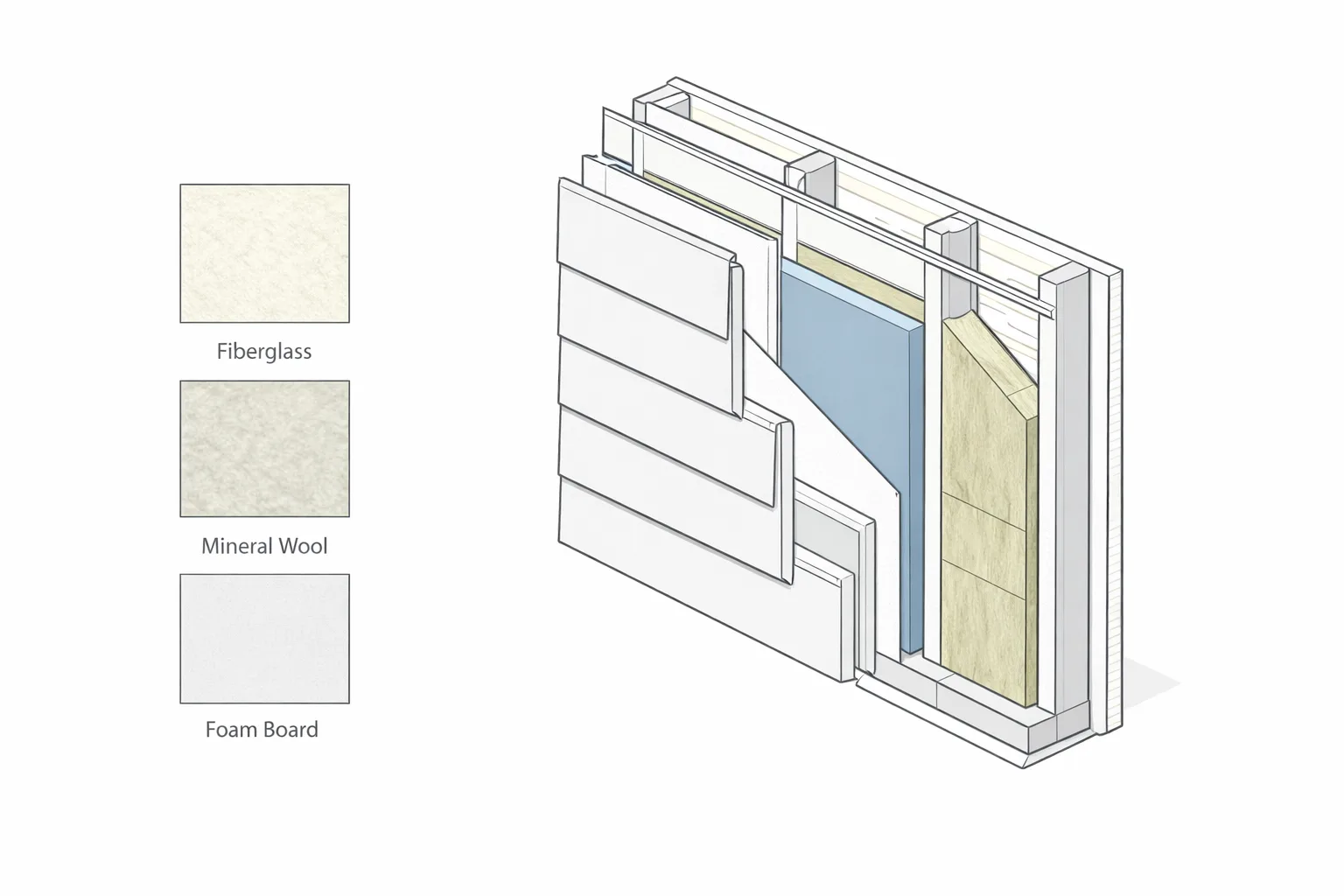
Six Factors Determining Insulation Thickness
- Climate: Heating and cooling loads, external design conditions and the current climate zone.
- Wall assembly: Thermal properties of brick, aerated concrete, reinforced concrete and existing renders.
- Board lambda value: Lower conductivity can increase thermal resistance at the same thickness.
- Target U-value: Limits heat transfer per unit area of the completed wall.
- Thermal bridges: Columns, beams, slab edges, balconies, plinths and window surrounds.
- Moisture and condensation: Layer sequence, indoor humidity and surface temperatures.
The Relationship Between Thickness and Lambda
The approximate thermal resistance of an insulation board is calculated using R = d / λ, where d is thickness in metres and λ is thermal conductivity in W/mK. For example, of two 8 cm products, the one with the lower lambda value can provide greater thermal resistance.
This is only the resistance of the insulation layer. Wall U-value calculations include all layers and internal and external surface resistances. Fixings and discontinuities can also require system corrections. The thicknesses below are therefore examples to examine during selection, rather than recommendations:
| Thickness being considered | Correct assessment |
|---|---|
| 5 cm external insulation | Improves some existing walls; cannot be called “adequate” without calculating whether it meets the current target |
| 8 cm external insulation | May be a common option; must be verified against city, wall and lambda value |
| 10 cm external insulation | Provides higher thermal resistance; sills, fixings, profiles and fire details must accommodate this thickness |
| 12 cm and above | May be required by the calculation; follow the system manufacturer's thickness and mechanical fixing details |
Does the Same Thickness of EPS and Stone Wool Give the Same Result?
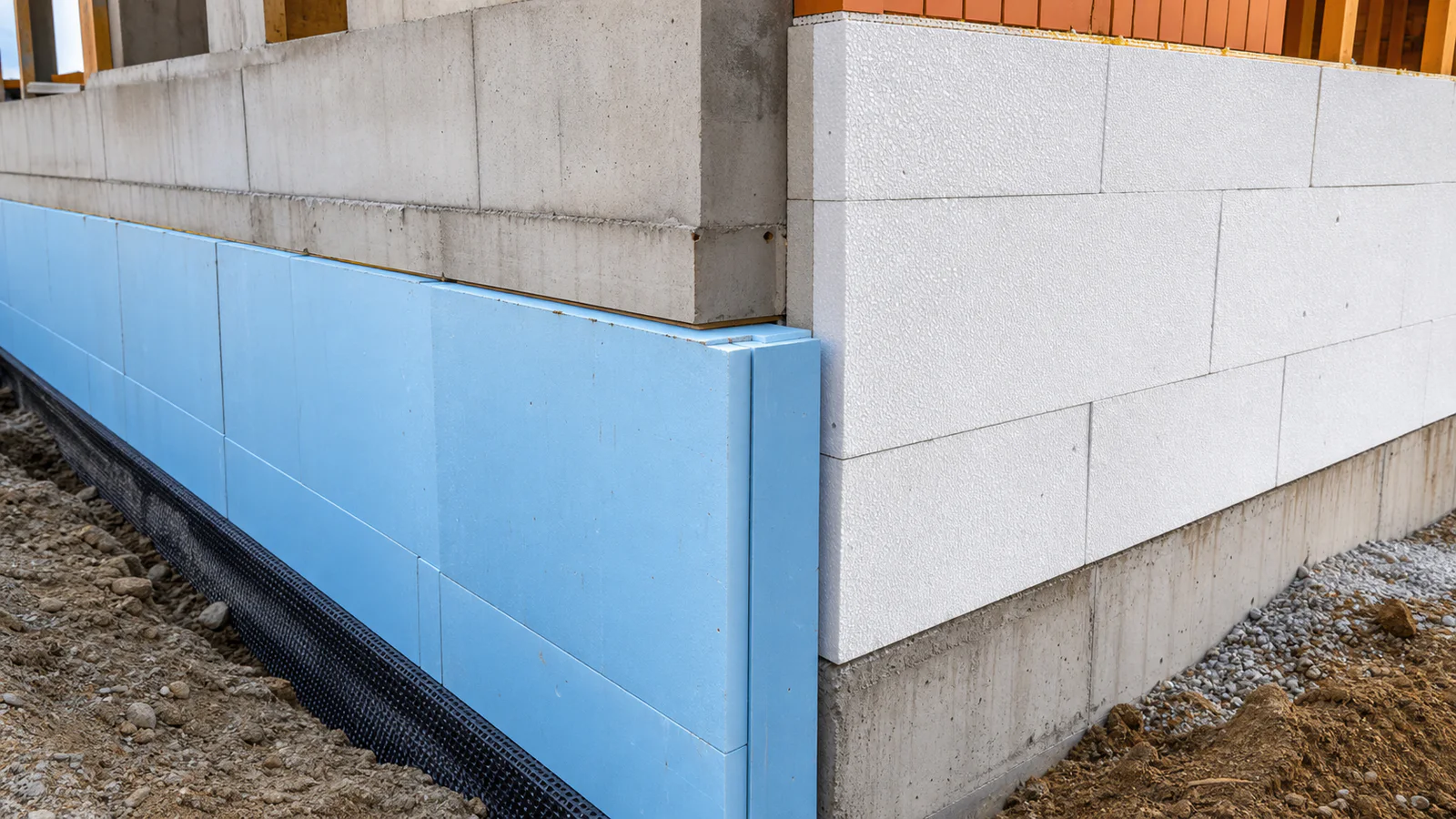
No. EPS, graphite-enhanced EPS and stone wool products have different lambda values even within their own families. Thermal performance is also only one façade consideration. Fire safety, sound control, vapour permeability, mechanical strength, building height and the final finish system matter too.
When choosing stone wool, use a board with tensile strength designed for rendered façades; for EPS, use a dimensionally stable façade board manufactured for ETICS. The stone wool and glass wool comparison explains mineral wool selection, while the XPS–EPS comparison details differences in foam board applications.
How Is Thickness Determined for Existing Buildings?
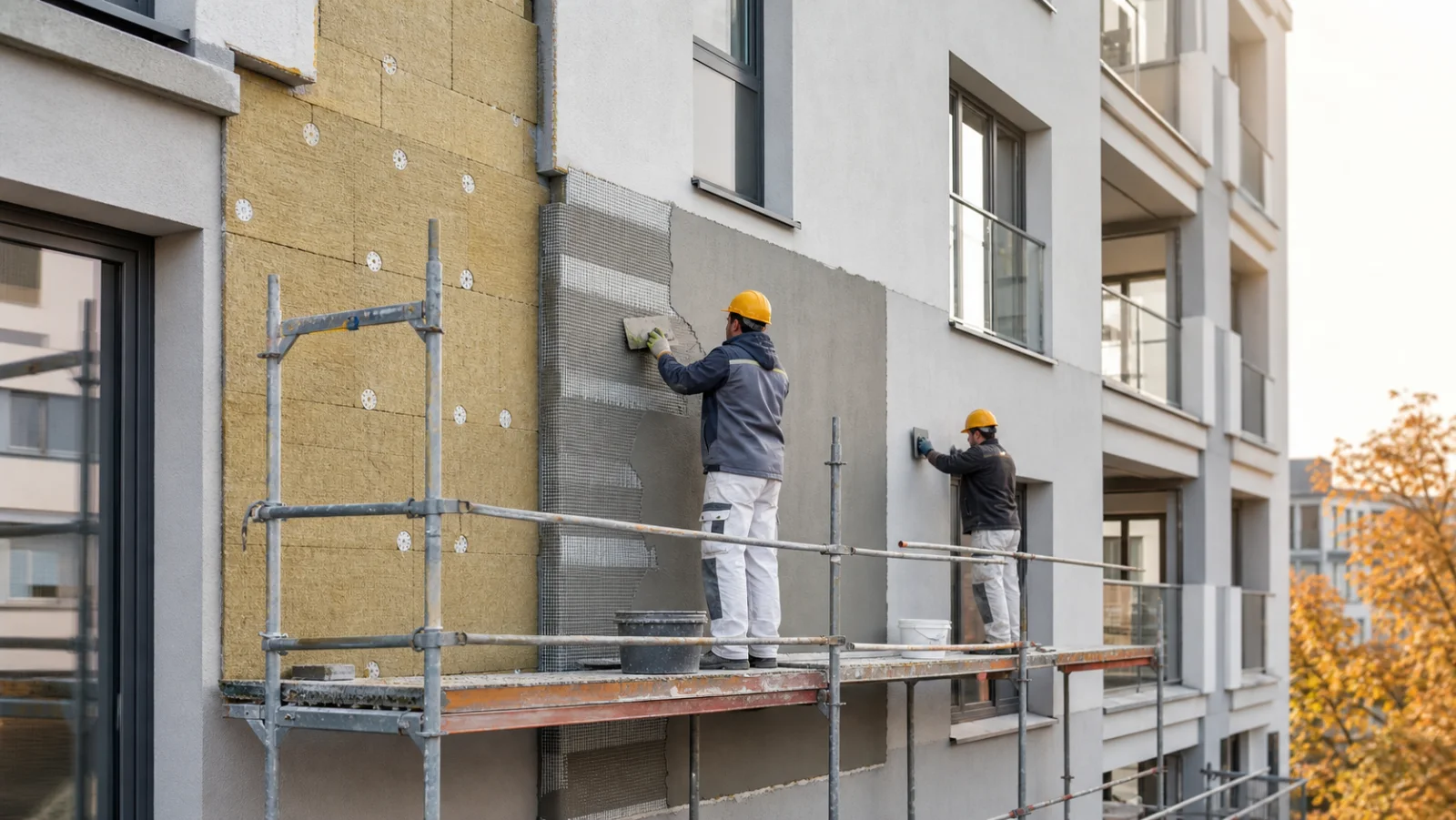
Verify the actual wall construction on site rather than relying only on drawings. Inspect column and beam areas, infill wall thickness, soundness of existing finishes, moisture damage and window sills. Where necessary, use thermal imaging, surface temperature measurements and controlled inspection openings.
Then model the existing wall assembly and calculate board thickness for the target energy performance. Improving only infill walls while leaving reinforced concrete members with thin insulation can maintain surface temperature differences and condensation risk. The main advantage of external insulation is wrapping the building envelope as continuously as possible.
Which Details Change as Thickness Increases?
- Fixing length must accommodate the board, adhesive, old render and required anchorage depth in the substrate.
- The starter profile or system base detail must suit the board thickness.
- Extend sills and prevent water entering behind the façade at drips and side returns.
- Maintain insulation continuity as far as possible around window and door reveals.
- Connections for air-conditioning brackets, railings and signs must avoid thermal bridges and water problems.
- Fire barriers and floor slab transitions must follow the design.
Is the Thickest Board Always the Best Choice?
The insulation layer's thermal resistance increases with thickness, but the economic optimum, architectural details and system limits must be considered together. A very thin board may miss the energy target. Choosing excessive thickness without calculation can create problems with window daylight openings, sills, mechanical fixings and façade geometry.
The correct approach is to calculate target performance first, then compare suitable products and thicknesses that deliver it on technical and economic grounds. The external wall insulation cost calculation explains how thickness affects quotation items.
How Should Thickness Be Specified in a Quotation?
“8 cm external insulation” alone is insufficient. State the board manufacturer and full product name, lambda value, dimensions, reaction-to-fire class, system adhesive, render, mesh, fixings and finish. The scope for window returns, sills, scaffolding, substrate repairs and measured areas must also be clear.
Frequently Asked Questions
How thick should external insulation be in Istanbul?
The city name alone cannot determine thickness. Calculate it using current TS 825 climate data, the existing wall assembly, product lambda value and target U-value.
Is 5 cm external insulation now inadequate?
There is no single answer for all buildings. A 5 cm board can improve an existing wall, but whether it meets the current project target must be verified by calculation.
Does doubling thickness double the savings?
No. Insulation resistance increases, but total building energy consumption is also affected by windows, the roof, air leakage, services and occupant habits.
Does stone wool external insulation need to be thicker?
The required thickness is determined by the chosen stone wool product's lambda value and wall calculation, rather than by the material name.
Can a new layer be added over old external insulation?
Do not apply a second layer without examining the existing system's adhesion, fixings, fire and moisture performance. A manufacturer's renovation detail and expert site assessment are required.
Conclusion: External insulation thickness should be determined by the current TS 825 calculation and actual wall assembly rather than sales habits. Browse external insulation products, stone wool and EPS board options, and contact Erk İzolasyon for thickness and quantity support based on your assembly.