Building services insulation is a critical application that is often out of sight in buildings and industrial facilities, yet directly affects energy performance. Incorrectly insulated hot water lines, cooling pipes, ventilation ducts and air-conditioning systems cause energy loss, condensation and comfort problems.
Why Is Building Services Insulation Necessary?
Energy produced by heating and cooling systems can dissipate into the surroundings through pipe and duct surfaces. This loss makes equipment run for longer and increases operating costs. Insulation helps the system maintain its target temperature.
Insulation on Hot Lines
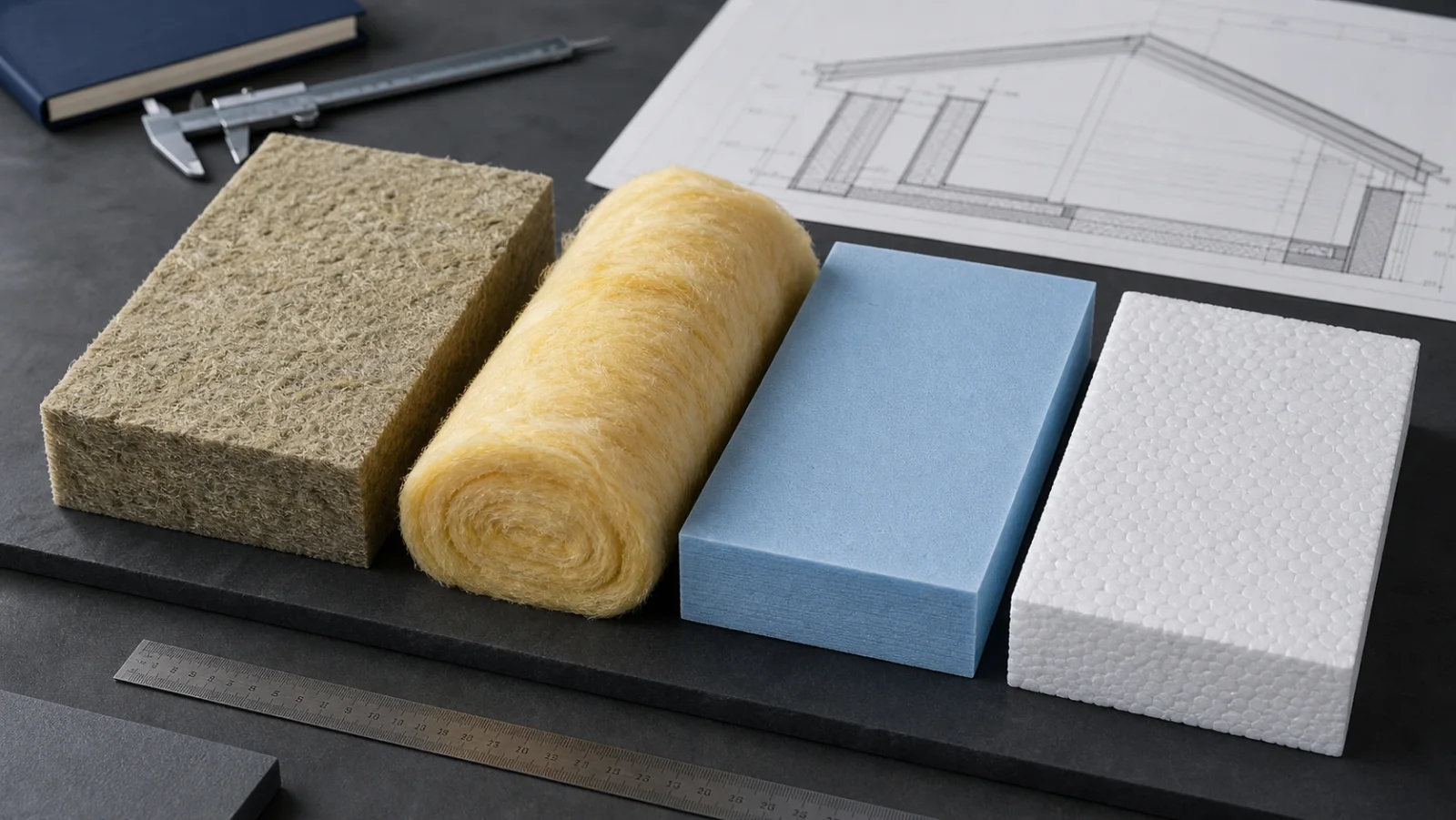
On hot water, steam and boiler lines, the main purpose of insulation is to reduce heat loss and keep surface temperatures at a safe level. Mineral wool pipe sections and blankets are frequently used here for their high-temperature resistance and fire performance.
Condensation Control on Cold Lines
Condensation is one of the greatest risks on cooling and air-conditioning lines. Water forms on the pipe when its surface temperature drops below the dew point. This can cause corrosion, dripping, mould and loss of insulation performance. Closed-cell rubber-based products provide a strong solution for these details.
Thermal and Sound Control in HVAC Ducts
Insulation in ventilation and air-conditioning ducts is used for sound control and reducing condensation risk as well as heat loss. Correct thickness and even cladding on the duct surface improve system efficiency and indoor comfort.
What Matters in Material Selection?
- Operating temperature: The material must suit the hot or cold line.
- Condensation risk: Vapour diffusion resistance is important on cold lines.
- Fire performance: The fire class must be checked in technical spaces.
- Mechanical strength: Protective cladding should be considered where impact or outdoor exposure is present.
Installation Mistakes Reduce Performance
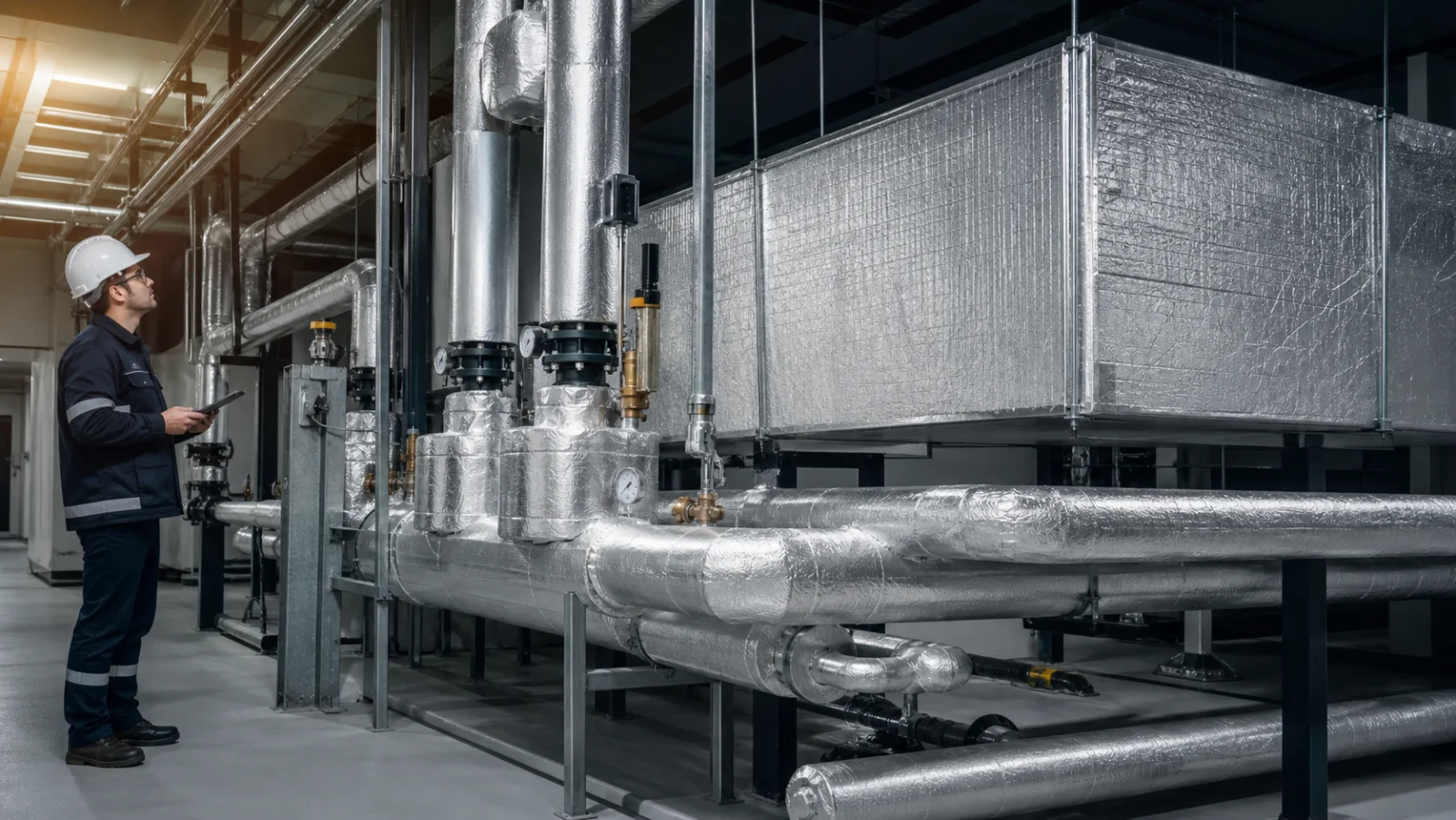
Open joints, uninsulated valves and fittings, incorrect thickness selection or unprotected outdoor installation reduce system performance. Continuity is as important as material quality in building services insulation.
Building Services Insulation Checklist
- Was thickness selected according to pipe diameter and line temperature?
- Were valves, flanges, elbows and connection points insulated?
- Were vapour movement and joints checked on cold lines?
- Was protective cladding installed in outdoor applications?
- Were fire and technical specification requirements met?
Frequently Asked Questions
Does building services insulation deliver a return on investment?
Yes. Reduced energy loss on heating and cooling lines lowers operating costs. The payback period varies according to the facility's intensity of use.
Can every pipe use the same insulation?
No. Hot lines, cold lines, outdoor exposure, fire risk and mechanical strength requirements call for different materials and details.
Conclusion: Building services insulation is essential for energy efficiency and operational safety. Correct materials, suitable thickness and continuous installation deliver both comfort and cost advantages.