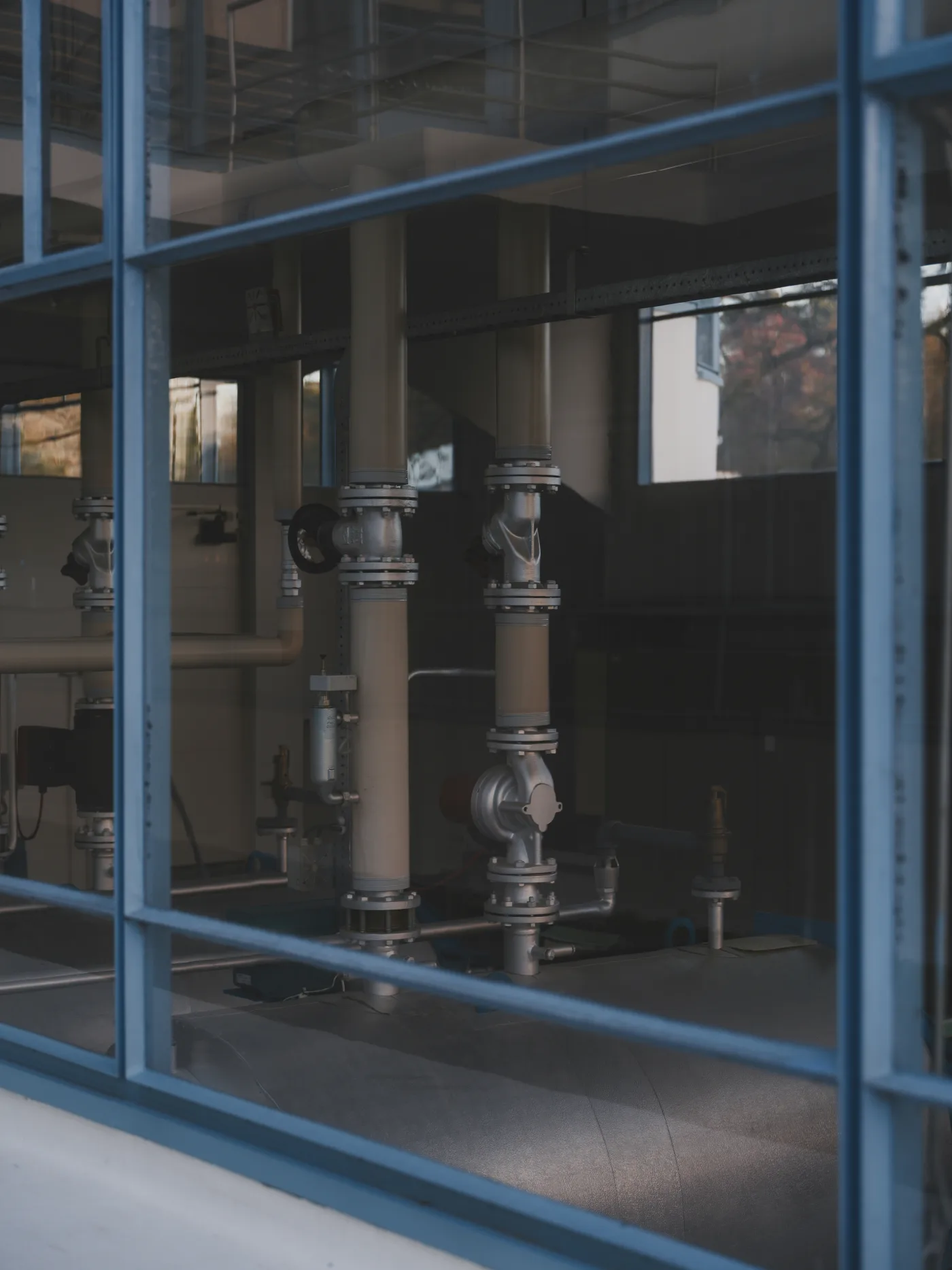
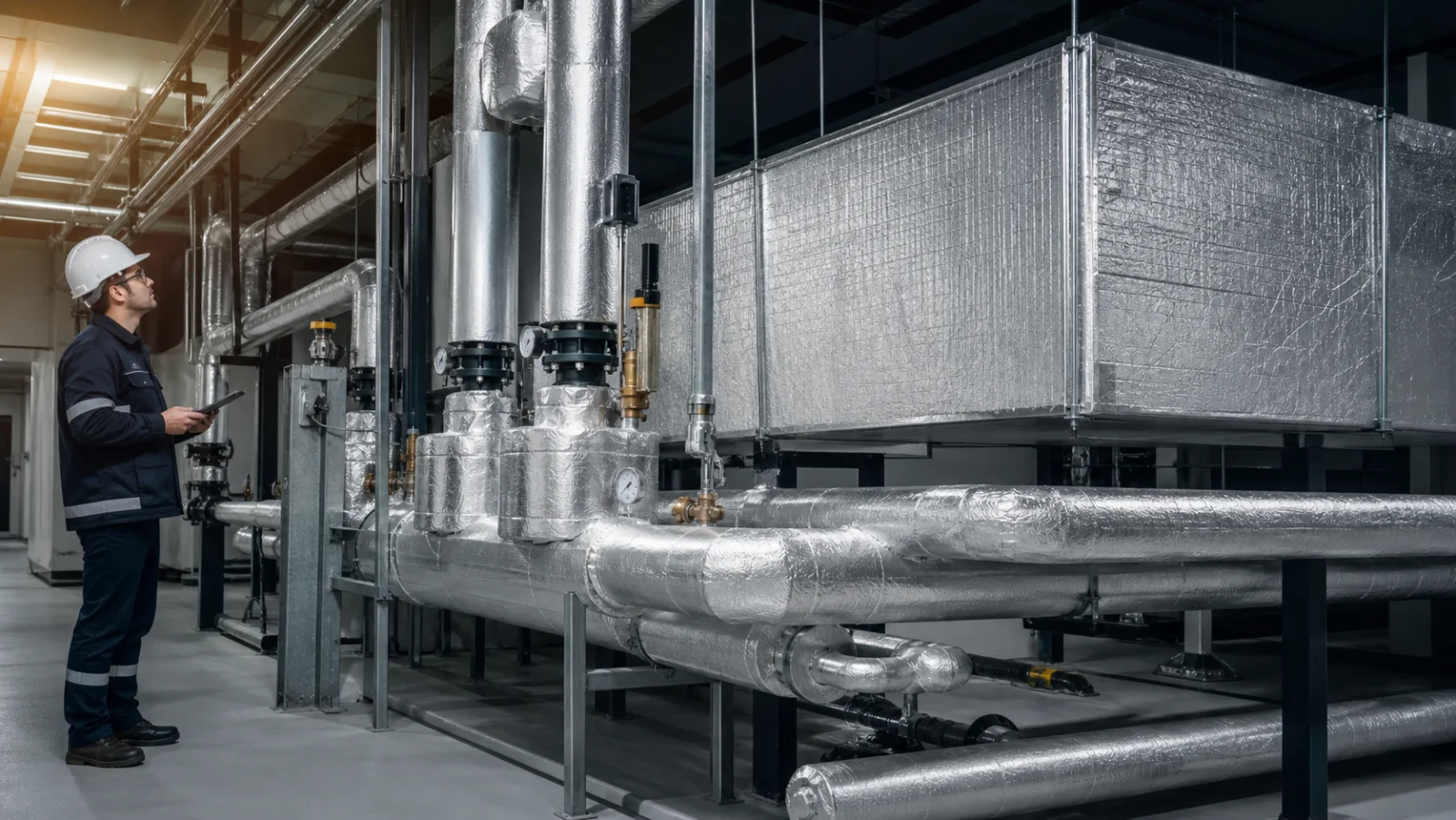
Sweating on chilled-water or air-conditioning pipes is condensation that can occur when the surface temperature falls to the dew point of the surrounding air. Rubber insulation of an appropriate thickness helps keep the outer surface above the dew point. However, covering only the straight pipe sections may not solve the problem if there are open joints, compressed material or an uninsulated fitting.
Armacell's explanation of condensation control highlights the relationship between insulation thickness and surface temperature, and how moisture can reduce insulation performance. Not every drip in a building is condensation. Before buying insulation, have an authorised service team check for a pipe leak or air-conditioning drain problem.
What Does Rubber Insulation Do?
Elastomeric rubber foam products are used to limit heat transfer and control condensation in building services. Tubular products and sheets suit different surface geometries. İzocam describes Optiflex Sheet as closed-cell elastomeric rubber; applications include the external surfaces of ducts and large-diameter pipes.
The vapour resistance of the closed-cell structure is important for cold services. Nevertheless, cuts, open joints or unsuitable hanger details in the completed system create routes for moisture to reach the cold surface. Armacell's refrigeration equipment guide considers vapour resistance and thermal isolation at pipe supports as parts of the same system.
How Many Millimetres Thick Should Rubber Insulation Be?
No single thickness suits every air-conditioning line. The same pipe faces different conditions in a cool plant room and in a hot, humid shaft. Prepare the following data for a thickness assessment:
| Required data | How should it be specified? |
|---|---|
| Pipe outside diameter or duct dimensions | State actual outside dimensions alongside the nominal line designation |
| Fluid operating temperature | Share normal operating and expected minimum temperatures |
| Ambient temperature and relative humidity | Include conditions that may occur in summer |
| Product thermal conductivity | Use manufacturer data at the calculation temperature |
| Installation location and surface finish | State indoor or outdoor use, confined shafts and protective coverings |
Provide these figures when requesting a quotation instead of saying “make it 19 mm”, and ask which conditions were used to calculate the chosen thickness. If thinner material is being considered because space is limited, reassess its effect on condensation control. Reusing the thickness from a previous job in another building is not a valid calculation method.
Is Tape Alone Enough at Joints?
The product installation instructions define how joints must be sealed. For Optiflex Sheet, İzocam specifies airtight adhesive bonding of joints, followed by insulation tape if needed. The tape must not compress the material and reduce its thickness. Joint and penetration details also require checking for self-adhesive products.
The installer should inspect elbows and areas around valves as well as straight runs. Metal connections at hangers and clamps can create unwanted heat transfer between the cold surface and the surroundings. Support details must be designed to maintain insulation continuity; arbitrarily compressing soft material does not solve this.
The checklist in the ArmaFlex industrial application manual requires clean, dry surfaces, no gaps at joints and monitoring of ambient conditions during installation. These are useful system checks; for another brand, adhesive type and application times must come from that manufacturer's instructions.
If Sweating Continues Despite Insulation
Share the following observations with the service team or installer. Symptoms help narrow down possible inspection points; they are not a definitive diagnosis on their own.
- Does dripping occur only at one joint or along most of the line?
- Is material crushed or a surface exposed around clamps, elbows or valves?
- Does the problem appear only on humid days or at particular operating hours?
- Is there tearing, separation or water ingress from outside on the insulation surface?
- Have the system temperature setting or the room's operating conditions changed?
Record where the dripping begins and the operating time, together with photographs. Do not simply add a new layer over wet or damaged insulation; first request assessment of the moisture source and the substrate condition. Notify the maintenance team if dripping reaches electrical equipment or occurs on an inaccessible service line.
Protecting Rubber Insulation Outdoors
For exposed services, select the protective covering required by the product against UV and mechanical effects. İzocam's Optiflex instructions require a protective jacket or paint for applications exposed to sunlight. A foil-faced appearance is not proof of suitability for every outdoor condition. List insulation, adhesive, joint materials and external protection separately in the quotation.
When reviewing the rubber sheet product for ducts and equipment, check its facing type and operating temperature limit. See the building services insulation guide to assess material selection for heating and cooling lines together.
Frequently Asked Questions
Is 9 mm rubber insulation enough for an air-conditioning pipe?
It cannot be called adequate without knowing the pipe diameter, operating temperature, ambient temperature and humidity. Thickness must be calculated using these conditions and the product's technical data.
Will thicker insulation stop all sweating?
If there is an open joint, faulty support or pipe leak, increasing thickness alone will not solve the problem. First identify the source of the dripping, then assess thickness and installation details together.
Are rubber sheets and tubular insulation ordered in the same way?
Sheets require width, length, thickness and total area; tubular products require the correct inside diameter, wall thickness and line length. Elbows, valves and the cutting plan must be included separately in the quantity calculation.
Get a Quotation for Products Suitable for Your Services
Send ERK İzolasyon the pipe outside diameter or duct dimensions, line length and operating conditions. Browse the rubber insulation products and share your product and quantity requirements via the 0554 713 71 72 WhatsApp line.
Sources were checked on 25 September 2026. This is a general selection guide; the final thickness and installation details must follow the mechanical services design and the selected product's current documents.